Keeping a workplace clean is not only about making sure the floors are swept and the rubbish is taken out. In an office, shop or commercial building, there are many areas that employees and visitors touch throughout the day. Door handles, washrooms, pantry counters and shared equipment are just a few examples.
This is why some businesses choose to work with professional hygiene companies in addition to their regular cleaning team. Depending on the provider, hygiene services may cover areas such as washroom care, soap or sanitizer dispensers, air care and scheduled servicing of hygiene equipment.
However, not every workplace has the same needs. A small office with ten employees will probably require a different setup from a shopping centre, factory or large corporate building. Before signing a service contract, it is worth looking at what the company actually provides and whether those services make sense for your workplace.
Check the Products and Safety Information
One of the first things to ask about is what products will actually be used inside your building. This is especially important when a service involves chemicals, disinfectants or other products that employees and visitors may come into contact with.
Instead of choosing a provider simply because they promise a “deep clean” or “complete protection,” ask for more information about the products they use. The company should be able to explain what each product is for and how it should be handled.
Safety Data Sheets, commonly known as SDS, may also provide useful information about certain chemical products. These documents can contain information about handling, storage and safety precautions.
It is also worth asking whether any relevant product registrations or regulatory requirements apply to the products being proposed for your workplace. This gives you something more useful to evaluate than marketing claims alone.
When comparing hygiene companies, do not be afraid to ask questions. If a particular chemical or treatment will regularly be used around your employees, you should understand what it is and why it is being recommended.
Look at the Equipment and Servicing Schedule
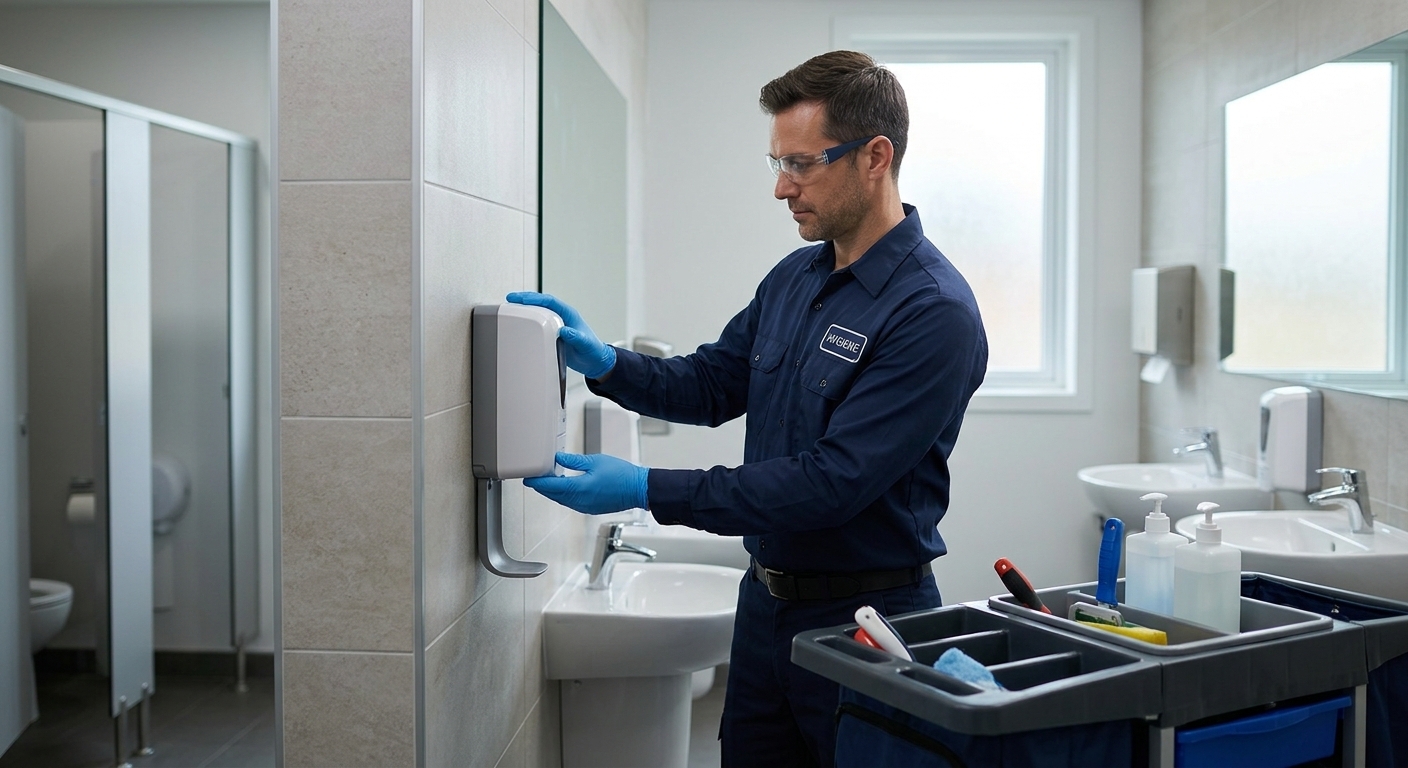
Hygiene services are not only about the cleaning products themselves. Many workplaces also use equipment such as soap dispensers, sanitizer units and air-care systems.
The equipment should be practical for the people using the building every day. When choosing the equipment, think about what it will be like to use every day. For example, a soap dispenser should not be leaking all the time or becoming empty before the next refill. Small problems like this can become annoying when many people are using the same facilities.
It is also worth discussing the servicing schedule before signing anything. A washroom in a large office may go through soap and other supplies much faster than one used by only a few employees. Because of that, the number of service visits should match how busy the place actually is.
The washroom itself is another area to look at closely. If supplies often run out or the existing equipment needs regular attention, a washroom solution can be included as part of the hygiene service. What is needed will depend on the current setup and how many people use the facilities.
You should also know who to contact if something happens before the next scheduled visit. A dispenser might stop working or supplies may finish earlier than expected. It is better to know how the provider handles these situations before you actually have to deal with one.
Ask for a Proper Site Assessment
Before suggesting anything, it helps if the provider actually sees the workplace first. What works for one office may not make much sense for another.
Say there are two companies with around the same number of employees. The first company works on one floor and only has a small pantry and one washroom. The second uses several floors with more shared areas and facilities. The other is spread across several floors with meeting rooms, shared spaces and multiple washrooms. Even though the employee numbers are similar, their hygiene requirements may be very different.
Having someone visit the site makes it easier to see these differences. They can walk through the workplace with you, see which areas are used the most and discuss any problems you are already having.
For example, you may already know that one washroom gets much busier than the others or that the pantry needs more attention during certain times of the day. These are the kinds of details that are easier to understand after seeing the workplace in person.
The assessment also gives the business an opportunity to explain existing problems. Maybe one washroom always runs out of soap before the next visit, or there is an area that needs more attention at certain times of the day. These are useful things to mention because the provider would not know about them just by looking around once.
Once they know what normally happens in the workplace, they can discuss a service arrangement that fits those problems better.
Compare What Is Included in the Service
When looking at different hygiene companies, don’t decide based on the price alone. Check what you actually get with each package because a cheaper quotation may not include everything you need.
For example, two companies might give you a similar price, but the services could be different. One quotation might already cover the dispensers, refills and regular visits, while another could list some of them as extra charges. Go through the quotation properly before agreeing to it. Look at the products provided, number of service visits, equipment included and what happens if additional support is needed.
Another thing to check is what happens to the equipment after it has been installed. If one of the dispensers stops working, ask whether the company will come back to repair it or replace it, and whether there is an extra charge.
It is better to ask about this at the beginning rather than finding out only when something breaks.
Consider the Needs of the People Using the Space
Think about the people who are in the building every day. Employees, customers and visitors may use different areas, so the hygiene setup should follow what is actually happening in the workplace.
Even the location of a dispenser can make a difference. If it is placed somewhere people rarely pass, it may hardly get used. Meanwhile, a busy washroom could run through its supplies much faster and need someone to check it more often.
The goal should not be to fill the building with as many hygiene products as possible. It is better to understand where they are actually needed and how often those areas are used.
A good provider should be willing to discuss these practical details rather than offering exactly the same package to every business.
Review the Service Over Time
The needs of a workplace can change. A company may hire more employees, move teams to another floor or start receiving more visitors than before.
Because of this, the hygiene arrangement that worked when the contract started may need to be adjusted later.
Pay attention to whether supplies regularly run out before the next service visit or whether some equipment is barely being used. If soap or other supplies keep finishing before the next visit, the current schedule might simply be too far apart. On the other hand, if some dispensers are hardly being used, they may not need the same amount of attention. These are things you can bring up with the provider when reviewing the service.
Conclusion
Choosing between hygiene companies takes a little more than comparing prices and picking the cheapest package. Before deciding, look at what you are actually getting for the price. Check the products provided, the equipment included and how often someone will come to service them.
Think about your workplace as well. A busy office with several washrooms will not have the same needs as a smaller workplace with fewer people. If one particular area always runs out of supplies or needs attention, mention it when discussing the service instead of assuming a standard package will cover everything.
In the end, you want a hygiene service that works with the way your workplace is actually used. Take some time to explain the problems you currently have and ask the provider what they would suggest. This makes it easier to decide whether their service is actually suitable for your business.