A commercial washroom gets used by many different people throughout the day. The number of users can change depending on the place. A small office washroom might only be used by staff, while one inside a shopping centre or restaurant can have people coming in and out all day. Naturally, the second one will need more attention.
When planning a washroom solution, it helps to look at what the washroom is actually missing. It could be something simple like soap dispensers that need frequent refilling, bins that are too small, or an air care system that is not working well for the space. Not every washroom will need the same setup.
Start by looking at the problems you already notice. Does the soap finish too early? Are the bins already full before they are serviced? Maybe there is a smell that comes back even after the washroom has been cleaned. Once you know which problem keeps happening, you have a better idea of what needs attention.
Choosing Between Touchless and Manual Equipment
Next, look at the equipment people use when they enter the washroom. Things like taps, soap dispensers and hand dryers may be used many times in a single day. In a busier place, they are likely to get even more use.
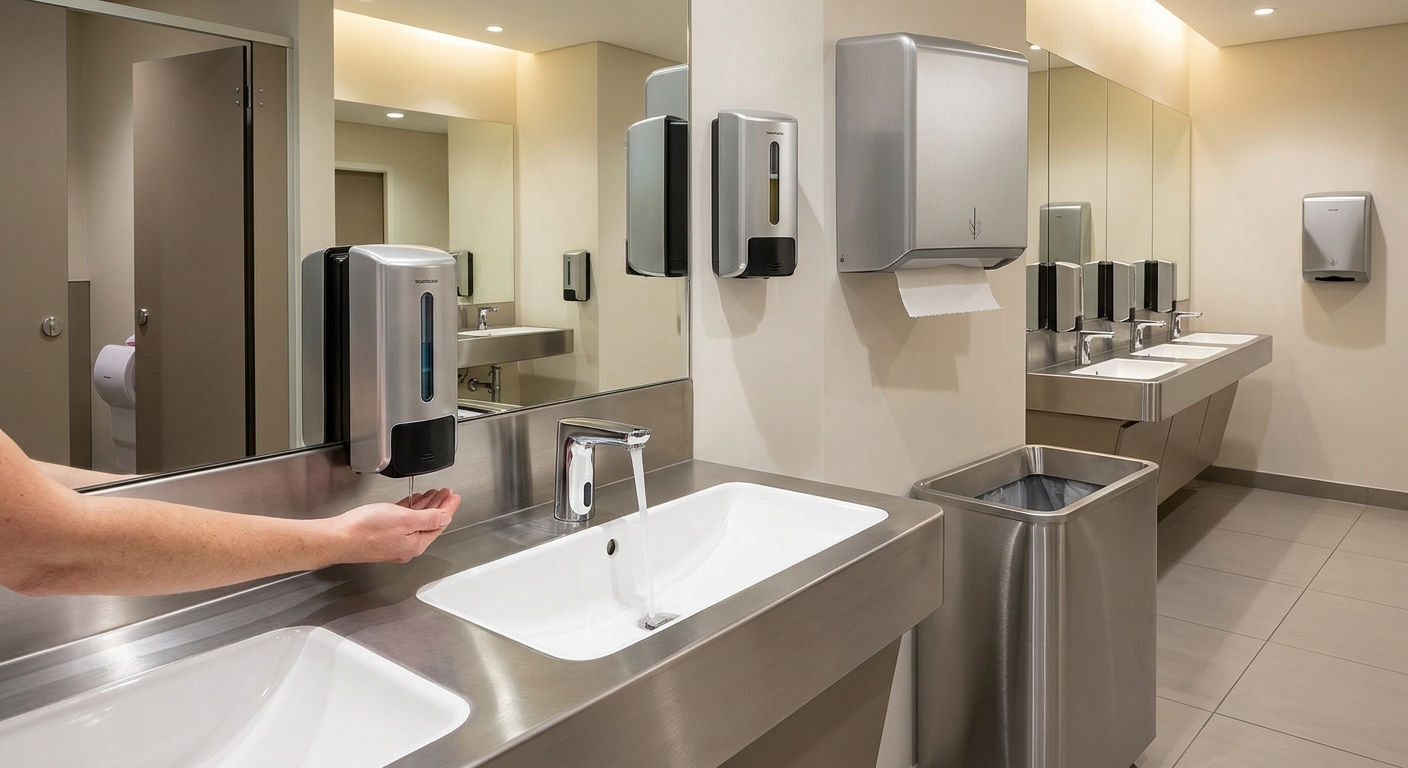
Touchless equipment can be one option. Take the soap dispenser as an example. With an automatic one, you put your hand underneath and the soap comes out. A manual one needs to be pressed. There is nothing wrong with either option. What matters more is whether it suits the washroom and can be maintained properly.
You also have to think about what happens later if the equipment stops working. Automatic dispensers have their own things to check. With an automatic dispenser, the problem could be something as small as the battery. The sensor might also stop responding properly after some time. Manual ones are different, but they can still leak or become difficult to press.
This is why I would not look at the design alone. Something that is easy to use and does not cause too much trouble later may be a better choice for a busy washroom.
Keeping Soap and Other Supplies Available
Installing the equipment is only half of it. The supplies inside still have to be checked from time to time.
Take soap as an example. If a lot of people use the washroom during the day, it can finish sooner than expected. The same thing can happen with toilet paper and paper towels. Nobody wants to walk into a washroom and realise there is nothing left when they need it.
This is why it helps to watch what normally runs out first. In a smaller office, the supplies might last until the next visit without any problem. A much busier washroom could be completely different.
Your washroom solution can then be planned around that actual usage. If soap is always the first thing to finish, for example, it may need checking more often. If they are regularly finishing too early, ask whether the refill schedule can be adjusted.
There is no point following the same schedule every month if it clearly does not match how the washroom is actually being used.
Dealing With Washroom Odours
You normally notice a bad smell as soon as you walk into a washroom. The first reaction might be to add more fragrance, but that may only hide the smell for a short time.
If the smell keeps coming back, try to find where it is coming from. Check the bins, urinals and other areas around the washroom instead of immediately adding a stronger air freshener. There could be something that needs cleaning or further attention.
Air-care products can still form part of the overall setup, but they should not be treated as a replacement for proper cleaning and maintenance.
Some hygiene companies also provide air care as part of their washroom services. If you are considering this, check what is included rather than assuming every company provides the same thing.
Ask how the air care unit works and when someone will come to check it. You can then compare that with what your washroom actually needs. This is more useful than simply choosing the strongest fragrance available.
Managing Feminine Hygiene Disposal
Feminine hygiene bins are another thing you will find in many washrooms. Where the bin is placed matters because people should be able to use it without having to move around awkwardly.
The bin should be placed somewhere users can reach easily. If they become too full before the next scheduled visit, the current servicing arrangement may not be suitable for how busy the washroom is.
The type of bin matters too. Some businesses may prefer manual units, while others may consider touchless options. The available space can help you decide between them. What fits comfortably in a large washroom may take up too much room in a smaller one.
Before signing up for the service, ask what happens to the bins after they are collected. You can also ask when collection takes place and what the normal process is.
This way, you know what you are paying for and how this part of the washroom will actually be managed.
Think About Where Equipment Is Placed
Equipment can work perfectly well and still be annoying if it is put in the wrong place.
You can see this easily in a small washroom. A bin placed too close to the walkway gets in the way, while a dispenser installed in an awkward corner may be difficult to reach. Neither problem means the equipment itself is bad. It is simply in the wrong spot.
Before installing several new units, look at the available wall and floor space. TWalk through the washroom as a user would. Where do you go first? Where do you wash and dry your hands? Looking at it this way can make awkward equipment positions easier to notice.
A good washroom solution should fit into the space naturally rather than making the washroom feel crowded.
This becomes particularly important in smaller commercial washrooms where there may not be much room available for additional equipment.
Adjust the Service According to Usage
The washroom might not be equally busy all year. For example, more people may start working in the office, or a shop may begin getting more customers than before. When that happens, the washroom will naturally be used more often too.
Because of this, the original service arrangement may eventually need to change.
You can usually tell when the current arrangement is no longer working well. Maybe the soap keeps finishing early, the bins are full before the next visit, or the same dispenser keeps giving problems.
If you notice the same problem more than once, bring it up with the service provider. Sometimes an extra refill or a different service day might be enough to sort it out.
You don’t necessarily need more products or equipment. It is to have a setup that works properly for the people who use the facilities.
Conclusion
A commercial washroom needs regular attention because many small things can affect how people experience the space. Soap running out, an overflowing bin or equipment that does not work may seem minor on its own, but these problems become noticeable when they happen repeatedly.
A suitable washroom solution should therefore be based on how the facilities are actually used. Instead of looking at each problem on its own, check how everything works together. This includes the supplies, bins, air care, equipment and how often the washroom is serviced.
If something in the washroom keeps causing trouble, make a note of it first. It could be a dispenser that always runs empty or a bin that fills up too fast. You can then show the provider what has been happening and ask what can be changed.